Understanding Harmonic Distortion in Photovoltaic Power Plants
Sources of Harmonics in Grid-Connected PV Systems
The main cause of harmonic distortion in photovoltaic power installations comes from those nonlinear power electronics we see everywhere these days, especially PV inverters and various switching devices. A recent study on grid integration back in 2024 found something interesting about this problem. They discovered that around two thirds of all harmonic currents measured at solar farms actually come from what's called voltage source inverters when they're doing their job converting DC to AC power. What happens here is pretty straightforward but technically complex at the same time. These inverters create these high frequency switching harmonics ranging somewhere between 2 and 40 kilohertz because of how they modulate pulses (that's PWM for short) along with some interleaving methods. There are also other contributors worth mentioning though. Transformers sometimes get saturated under certain conditions, and when multiple inverters work together in big solar parks, they can interact in ways that produce additional harmonics as well.
Impact of Harmonic Distortion on Power Quality and System Efficiency
When left uncontrolled, harmonics cut down on system efficiency somewhere around 3 to 7 percent according to Ponemon's research from last year. This happens because conductors lose more energy and transformers get hotter than they should. If voltage distortion goes over 5% THD, things start going wrong pretty fast. Protective relays stop working properly and capacitors tend to fail unexpectedly. The problem gets worse for inverters too. Those running in environments full of harmonics see their insulation break down about 15 to 20% quicker, which means more frequent repairs and higher expenses. Some really bad situations occur when there's resonance happening between the grid's inductance and what comes out of PV inverters. This effect makes certain harmonics grow so strong that equipment actually gets damaged beyond repair sometimes.
Common Harmonic Standards and Compliance in Renewable Energy Installations
Standards organizations around the world have set pretty strict rules about voltage total harmonic distortion (THD) levels needing to stay below 5% and current harmonics must not exceed 8% at points where systems connect to the power grid. For photovoltaic installations larger than 75 kilowatts, there's another requirement from the IEC 61000-3-6 standard that calls for specific tests measuring these harmonic emissions. Meeting all these regulations typically means implementing various mitigation techniques. Some common approaches include designing inverters with better topologies and installing active power filtering equipment. Most regulators today insist on continuous monitoring of harmonics within solar farms. This helps avoid costly fines when grid stability issues arise due to excessive harmonic content.
Working Principle of Active Power Filters in PV Systems
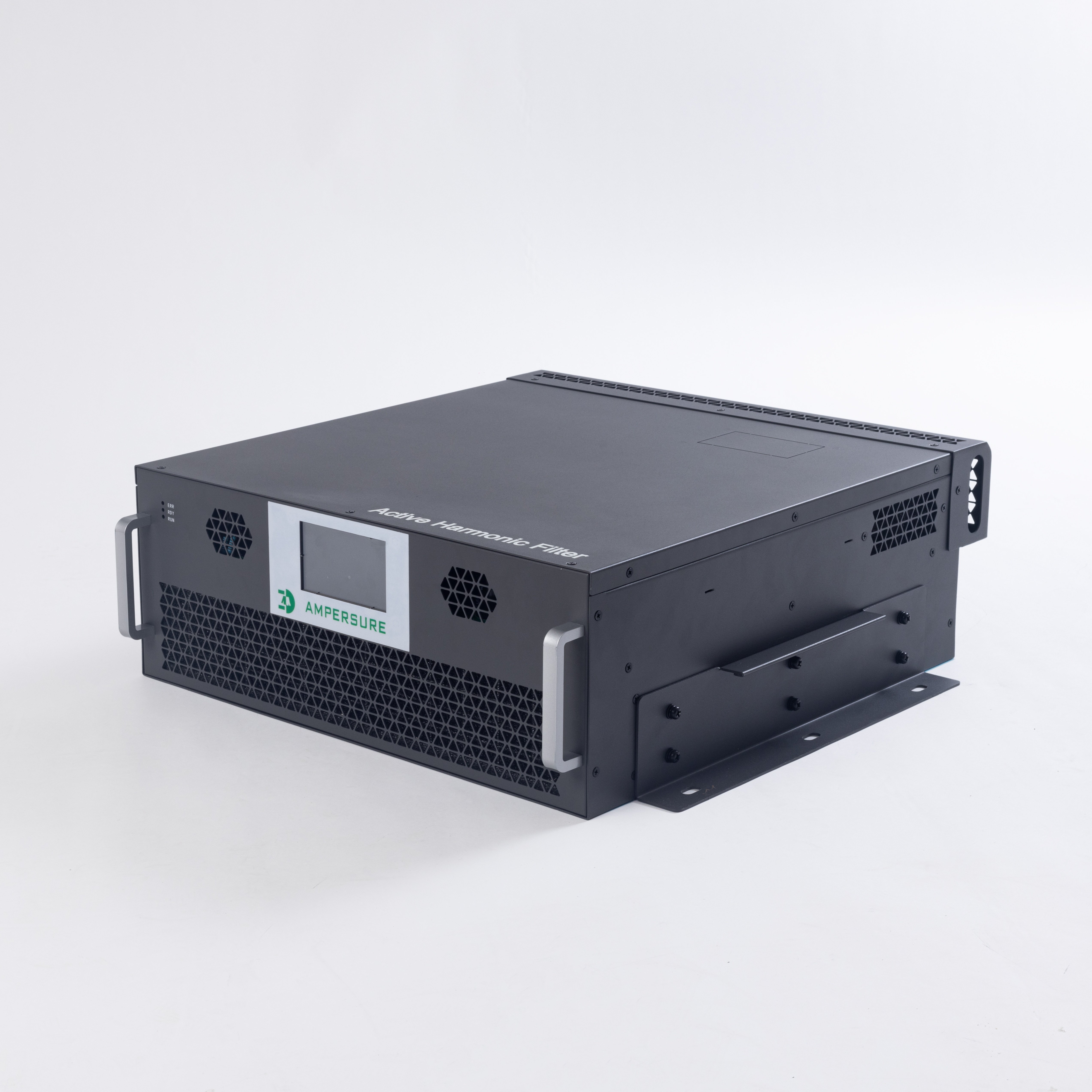
Active power filters or APFs tackle those pesky harmonic distortions in solar systems by detecting and canceling out bad currents in real time. They work with current sensors and DSP technology to look at what's happening with the load currents, picking out even the smallest harmonic issues like third order distortions. Some field tests have actually shown that APFs can cut down on total harmonic distortion by nearly 88% in solar plants rated at 500 kW when compared against traditional passive filters. This kind of performance makes a big difference for system stability and efficiency.
How Active Power Filter Detects and Cancels Harmonic Currents
Monitoring grid current happens continuously through Hall effect sensors that pick up those harmonic signals with pretty good precision around half a percent error margin. What follows is some serious number crunching by advanced DSP algorithms that create these counter currents exactly out of phase with whatever harmonics were detected. Take a look at what researchers found in their 2023 work on real time compensation techniques. They showed that when active power filters operate at switch rates reaching 20 kilohertz, they can actually cancel out nearly all those pesky fifth and seventh order harmonics in just two thousandths of a second. Pretty impressive stuff for anyone dealing with power quality issues day to day.
Instantaneous Reactive Power Theory (p-q Method) for Real-Time Control
This control methodology separates instantaneous active (p) and reactive (q) power components using Clarke transformations. By synchronizing with grid voltage through phase-locked loops (PLLs), the p-q method maintains power factor above 0.98 even during 30% irradiance fluctuations. Research shows this approach reduces reactive power demand by 72% compared to traditional PI controllers.
Current Reference Generation and PWM-Based Inverter Switching
This system takes those compensation signals and turns them into actual switching commands through what's called space vector PWM modulation. These days, most active power filters are built around IGBT based inverters that run at over 97 percent efficiency thanks to some pretty clever dead time compensation techniques which cut down on those pesky switching losses. Looking at various PWM voltage source inverter research papers, we find these designs can cancel out harmonics across bandwidths well beyond 2 kHz. And here's something important too they keep total harmonic distortion under 4%, meeting all those requirements set forth in the latest IEEE 519 standard from 2022.
| Parameter | Traditional Filter | Active Power Filter |
| Response Time | 50–100 ms | <2 ms |
| Harmonic Order Handling | Fixed (5th,7th) | 2nd–50th |
| THD Reduction | 40–60% | 85–95% |
| Adaptability | None | Dynamic Load Tracking |
Integration and Control Strategies for Active Power Filters in PV Plants
Getting active power filters (APFs) properly integrated into photovoltaic plants needs careful setup and control strategies that keep things compliant with grid standards while maintaining good power quality. Most modern installations go for shunt APF setups because they connect in parallel, allowing them to cancel out harmonics on the fly without messing with the actual solar power production. According to research published in 2023 through IntechOpen, around 89 percent of new large scale solar farms now incorporate these shunt APFs working alongside phase locked loop (PLL) systems. These setups manage to align grid voltages pretty precisely, typically within half a degree either way. That kind of accuracy makes a big difference in how well these solar installations perform overall.
Shunt Active Power Filter Configuration and Synchronization with Grid Voltage (PLL)
Shunt APFs operate by injecting counter-harmonic currents into the grid through voltage source inverters. Key advantages include:
- Compatibility with variable PV output (3-150 Hz frequency range)
- 98.7% synchronization accuracy using PLL-based controllers
- <5 ms response time for sudden load changes
Adaptive vs. Fixed-Gain Controllers in Dynamic PV Environments
Adaptive controllers enhance harmonic suppression in fluctuating irradiance conditions by automatically adjusting gain parameters. Field tests in 2024 showed adaptive systems reduced total harmonic distortion (THD) from 8.2% to 3.1% under partial shading, outperforming fixed-gain models by 42% in transient response.
Integration Methods of Active Power Filter with PV Inverters
Three primary integration approaches dominate modern PV plants:
| Method | THD Reduction | Implementation Cost |
| Centralized APF | 82-91% | $15,000-$35,000 |
| String-level APF | 74-86% | $8,000-$18,000 |
| Hybrid APF-PV Inverter | 89-95% | Integrated Design |
A 2024 ScienceDirect analysis revealed hybrid systems improved energy yield by 6.8% compared to standalone APF solutions in 500 kW solar arrays.
Hybrid Photovoltaic-Active Power Filter Systems: Design and Performance
Dual-Function Inverter Design: Simultaneous Power Generation and Harmonic Compensation
Hybrid photovoltaic-active power filter systems now use special inverters that handle both energy conversion and reduce electrical noise at the same time. The latest designs actually build the power filtering function right into the main PV inverter unit. This cuts down on parts needed by around 37% when compared to having separate components, according to research from Wong and colleagues back in 2021. These systems work their magic through clever switching techniques that let them track maximum solar power points while also canceling out unwanted harmonics. They share key components like DC-link capacitors and those IGBT modules we see in most modern electronics. Real world testing indicates these setups keep total harmonic distortion below 3%, which is pretty good considering they also manage to convert sunlight to electricity with about 98.2% efficiency. Pretty impressive for something that helps clean up our power grids while making better use of renewable energy sources.
Simulation and Field Performance of Hybrid PV-APF Systems
Hardware-in-the-loop (HIL) simulations of 500 kW hybrid systems demonstrate 89% faster harmonic response times than conventional passive filters. A 2024 renewable energy study revealed adaptive controllers in PV-APFs reduce voltage fluctuations by 62% under partial shading conditions. Field deployments show sustained THD suppression below 5% across 1,200+ operating hours, even with 30% nonlinear loads.
Case Study: Reducing THD from 28% to Under 5% in a 500 kW PV Plant
A commercial solar farm eliminated harmonic-induced transformer overheating through PV-APF integration. The hybrid system deployed eight 60 kVA dual-function inverters in shunt configuration, achieving:
-
Grid Current THD: Reduced from 28% to 4.7%
-
Reactive Power Compensation: 92% capacity at 0.95 power factor
-
Energy Savings: $7,200/month in reduced filter maintenance and grid penalty avoidance
Post-installation monitoring confirmed compliance with IEEE 519-2022 standards under 25% variable cloud cover scenarios.
Benefits and Challenges of Active Power Filter Deployment in Solar Farms
Improving Grid Code Compliance and Power Quality in Renewable Energy Systems
Active power filters help keep things within the bounds of utility voltage regulations by keeping total harmonic distortion (THD) under that critical 5% threshold set forth in IEEE 519-2022 standards. According to recent studies from 2023 looking at twelve large scale photovoltaic installations, these filters typically boost power factors between 0.15 and 0.25 while cutting down voltage imbalance issues by around two thirds. What makes them particularly valuable is their ability to handle those sudden dips in voltage when clouds pass over solar arrays, something that can really throw off grid stability. Most modern grid specifications demand no more than 10% variation in voltage levels, and active filters consistently meet this requirement across different operating conditions.
Mitigation of Interharmonics and Voltage Fluctuations Using Active Filtering
Variations in solar irradiance generate unwanted interharmonics within the 1 to 2 kHz frequency range, something standard inverters simply aren't equipped to handle effectively. To combat this issue, active filters employ real time pulse width modulation switching with response times under 50 microseconds, successfully eliminating these harmonic distortions. Field testing has demonstrated impressive results, with reductions of around 85 to 90 percent observed specifically for 150 to 250 Hz interharmonics. These improvements are critical because they stop transformers from overheating while simultaneously cutting down on line losses by approximately 12 to 18 percent across photovoltaic installations exceeding one megawatt capacity. An added benefit comes when these filters work alongside energy storage solutions, where they significantly reduce voltage flicker problems during sudden changes in solar power generation, achieving suppression rates between 60 and 75 percent according to industry measurements.
Cost vs. Reliability Trade-Offs in Large-Scale PV Plants
Active power filters do cost around 30 to 40 percent more upfront than passive alternatives, but they make up for it through much better long term savings. These systems typically run at 92 to 97 percent efficiency, which cuts down on yearly maintenance expenses by roughly $18 to $22 for every kilowatt across five years. What makes them even more attractive is their modular setup. Facilities can install these filters incrementally and still keep things running smoothly since the redundancy built in maintains less than half a percent harmonic distortion when any single filter needs attention. There's one catch though - getting these systems properly commissioned requires an extra investment of about $4.50 to $6.80 per kW added to installation costs. For smaller operations under 50 megawatts, this means doing some serious number crunching before deciding if the long term benefits outweigh the initial price tag.
FAQ Section
What are the main sources of harmonics in photovoltaic power plants?
The primary sources of harmonics in photovoltaic power plants are voltage source inverters, which contribute two-thirds of the harmonic currents, and interactions between multiple inverters or saturated transformers.
How do harmonic distortions impact system efficiency and power quality?
Harmonic distortions can decrease system efficiency by 3 to 7%, lead to malfunctioning of protective relays and capacitor failures, and increase the breakdown of inverter insulation by 15 to 20%.
What standards govern harmonic levels in renewable energy installations?
Voltage total harmonic distortion (THD) should remain below 5%, and current harmonics should not exceed 8% according to several standards, including the IEC 61000-3-6 for installations larger than 75 kW.
How do active power filters work to reduce harmonics in PV systems?
Active power filters use current sensors and DSP technology to detect and cancel harmonic currents in real time, significantly reducing total harmonic distortion in the system.
What are the benefits and challenges of deploying active power filters in solar farms?
While active power filters improve grid code compliance and power quality, their initial costs are higher compared to passive alternatives. However, they offer better long-term savings through increased efficiency and reduced maintenance.

 EN
EN
 Hot News