
 EN
EN
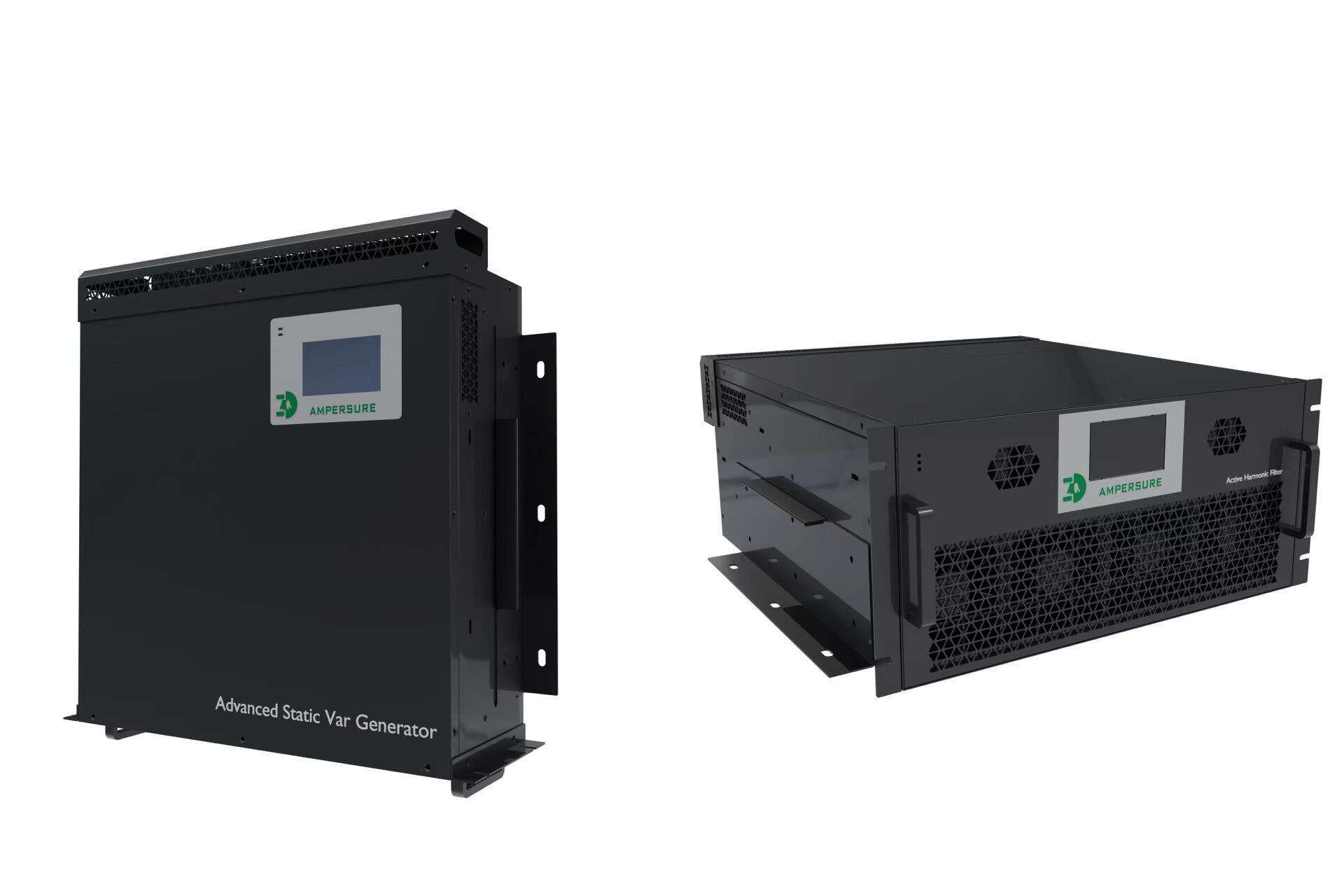
Understanding Reactive Power Fines and the Impact of Low Power Factor
What Are Reactive Power Fines?
When factories run their equipment with a power factor below what's agreed upon in contracts usually between 0.85 and 0.95 they end up getting hit with these extra charges from the utility companies. The money goes toward fixing problems caused by poor power factors since reactive power basically makes the electricity system work harder without actually doing anything productive. Take a plant using 500 kilowatts at just 0.75 power factor compared to one running at 0.95. The lower number means almost 30% more current flowing through everything which puts serious stress on transformers and all those wires that carry power around the site.
How Low Power Factor Increases Energy Costs and Triggers Penalties
Low PF creates a dual financial burden:
- Increased I²R losses: Excess current raises conductor temperatures, wasting 2â4% of total energy as heat.
- Demand charge multipliers: Utilities often apply PF-based adjustments to peak kW demand billing. A 0.70 PF could inflate a $15,000 monthly demand charge by 35%, adding $5,250 in penalties.
Utility Tariff Structures and Power Factor Clauses
Most industrial tariffs use one of two PF penalty models:
| PF Threshold | Penalty Mechanism | Example |
|---|---|---|
| <0.90 | 1.5x multiplier on peak demand charges | $20,000 demand â $30,000 |
| <0.85 | $2/kVAR of reactive power consumed | 800 kVAR â $1,600 fine |
Data from energy management analyses shows 83% of manufacturers face PF penalties when exceeding 300 kW demand. Proactive deployment of power factor compensators eliminates these avoidable costs while improving electrical system capacity.
How a Power Factor Compensator Prevents Reactive Power Charges
Reactive Power Compensation Mechanisms Explained
Power factor compensators work by balancing out inductive reactive power (kVAR) through the injection of capacitive reactive power. Motors and transformers tend to pull in what's called lagging current, so when this happens, the compensator senses the imbalance in electrical phases and brings in capacitors to create leading current instead. The end result? A better balance between actual usable power (measured in kW) versus total power demand (kVA). Industry studies indicate that for every unit of kVAR compensated, around 0.95 to just over 1 kVAR gets taken off the grid supply, which helps avoid those costly utility penalties many facilities face during peak times.
Role of Capacitors in Power Factor Improvement
Capacitors form the core of correction systems by neutralizing inductive loads. When properly sized, they reduce reactive power demand by up to 98%. Key principles include:
- Capacitor banks supply 35â50% of their rated kVAR within two cycles of activation
- Strategic placement near motor control centers improves cost-efficiency
- Advanced compensators adjust capacitance in 10 kVAR increments to match real-time load changes
Real-World Data: Reducing kVAR Demand After Installation
Looking at 82 different industrial sites in 2023 showed something interesting about power factor compensators. These devices cut down the average reactive demand significantly over just half a year, bringing it down from around 300 kVAR all the way to 150 kVAR. Take one example from the food processing sector where their power factor went up dramatically from 0.73 to an impressive 0.97. That change alone slashed their monthly penalty fees from nearly $3,000 down to barely $120. When companies run proper energy audits, they find these capacitor systems pay for themselves pretty quickly too. Most get their money back within 18 to 24 months as they eliminate almost all those costly reactive power charges while also saving on overall energy consumption across the board.
Capacitor Banks and Automatic Power Factor Control Systems
Capacitor Banks and Reactive Power Injection Dynamics
Capacitor banks counteract inductive loads by injecting leading reactive power into electrical systems, bringing power factor closer to unity. A 100 kVAR bank can improve power factor from 0.8 to 0.95 in 400V systems, reducing apparent power demand by 18% (Dadao Energy 2024).
Case Study: Correcting Power Factor from 0.75 to 0.98 in an Industrial Plant
A manufacturing facility installed a 350 kVAR capacitor bank, improving power factor from 0.75 to 0.98 within six weeks. Monthly reactive power penalties dropped by 92%, achieving annual savings of $32,000 in demand charges. Industry studies show such corrections typically pay for themselves in 14â18 months through avoided utility penalties.
Automatic Power Factor Control Technology: Relay vs. Microprocessor-Based Systems
Modern microprocessor-based controllers monitor voltage, current, and power factor up to 50 times per second, enabling ±0.01 precision. Unlike electromechanical relays that cycle capacitors every 60â90 seconds, digital systems adjust compensation in real timeâreducing capacitor switching losses by 37% (IEEE 2023).
Integration with Smart Grid and Energy Management Systems
Advanced compensators interface with SCADA systems and smart meters, enabling dynamic reactive power management across distributed energy resources. This integration allows facilities to participate in utility demand response programs while maintaining compliance with grid code requirements (0.95â0.98 lagging).
Sizing and Designing an Effective Power Factor Correction System
Step-by-Step Calculation of Required kVAR for Power Factor Correction
Engineers need to calculate the right size for a compensator using this basic formula: Qc equals P times the difference between tangent phi one and tangent phi two. Here, P stands for active power measured in kilowatts, while those phi angles represent the starting and desired power factor levels. Let's take a real world example - say we have a plant running at 400 kW trying to boost its power factor from 0.75 up to 0.95. Plugging these numbers into our equation gives us something like Qc equals 400 multiplied by (approximately 0.88 minus around 0.33), which works out to roughly 221.6 kVAR of reactive power needed. Most industries follow this approach because it aligns with standard practices across energy management systems. The good news is that following this method generally keeps facilities within acceptable limits set by local utilities regarding their power factor performance.
Load Profiling and Peak Demand Considerations
Load variability significantly impacts compensator sizing. A plant with 120% afternoon peak demand may require 30% more capacitor capacity than base-load calculations suggest. Engineers analyze 15-minute interval data over 30 days to identify:
- Harmonic distortion risks
- Transient load spikes (>150% nominal load)
- Continuous versus intermittent operation patterns
Example: Sizing a System for a 500 kW Facility
A food processing plant operating at 0.72 PF installed a 300 kVAR compensator based on calculated needs:
| Parameter | Value |
|---|---|
| Active Power | 500 kW |
| Initial PF | 0.72 |
| Target PF | 0.98 |
| Calculated kVAR | 292 |
| Installed kVAR | 300 |
| Post-installation results showed elimination of $8,400/year in reactive power penalties and a 7.1% reduction in peak demand charges. |
Financial Benefits and ROI of Installing a Power Factor Compensator
Quantifying Financial Savings from Power Factor Correction
Most industrial plants see their energy bills drop somewhere between 12% and 18% about six months after putting in place power factor correction systems. The main reason? They stop getting hit with those costly reactive power penalties from utility companies. When power factor drops below 0.9, many utilities start charging extra fees. According to data from the Energy Regulatory Commission in 2023, these charges average around $15 to $25 for every kilovar of excess reactive demand each month. Keeping power factor consistently above 0.95 not only avoids all those penalty costs but also cuts down on transformer losses caused by I squared R effects. Facilities report reductions in these losses ranging from roughly 19% up to as much as 27%, depending on their specific equipment and load conditions.
Reducing Energy Costs Through Reactive Power Compensation: Case Evidence
A European automotive parts supplier saved â¬19,200 annually after installing capacitor banks, reducing reactive power charges by 94%. The system corrected power factor from 0.68 to 0.97 and lowered transformer temperatures by 14°C, extending equipment life and reducing cooling costs.
ROI Analysis: Payback Period and Long-Term Penalty Avoidance
Most power factor compensators start paying for themselves within 18 to 28 months, thanks to three main areas where money gets saved. First, they eliminate those costly utility penalties which account for about 40% of total savings. Then there are the reduced peak demand charges making up roughly 35%, and finally, better efficiency cuts down on actual energy usage by around 25%. The automated control systems keep power factors stable too, with fluctuations staying under 2% throughout entire production runs so plants stay compliant without constant monitoring. Looking at the bigger picture, factories installing these systems generally see somewhere between half a million and almost three quarters of a million dollars saved over ten years for every 500 kW of load capacity they handle. That kind of return makes a strong business case for investing in power quality improvements right now.
Frequently Asked Questions
Why are factories fined for low power factor?
Factories are fined for low power factor because it indicates inefficient use of electrical power. A low power factor means more current is needed to provide the same amount of real power, placing stress on the electrical infrastructure and causing greater energy losses.
How can factories avoid reactive power fines?
Factories can avoid reactive power fines by installing power factor compensators, such as capacitors, to improve the power factor. This reduces the reactive power demand and thus the likelihood of incurring penalties from utility companies.
What are the financial benefits of improving power factor?
Improving power factor can lead to reduced energy bills by avoiding reactive power penalties, reducing peak demand charges, and minimizing energy losses in transformers. This improvement often results in energy cost savings between 12% to 18%.
What is a power factor compensator?
A power factor compensator is a device, usually involving capacitors, designed to improve the power factor of an electrical system by reducing lagging reactive power demand and improving overall efficiency.
Table of Contents
- Understanding Reactive Power Fines and the Impact of Low Power Factor
- How a Power Factor Compensator Prevents Reactive Power Charges
- Capacitor Banks and Automatic Power Factor Control Systems
- Sizing and Designing an Effective Power Factor Correction System
- Financial Benefits and ROI of Installing a Power Factor Compensator
- Frequently Asked Questions