
 EN
EN
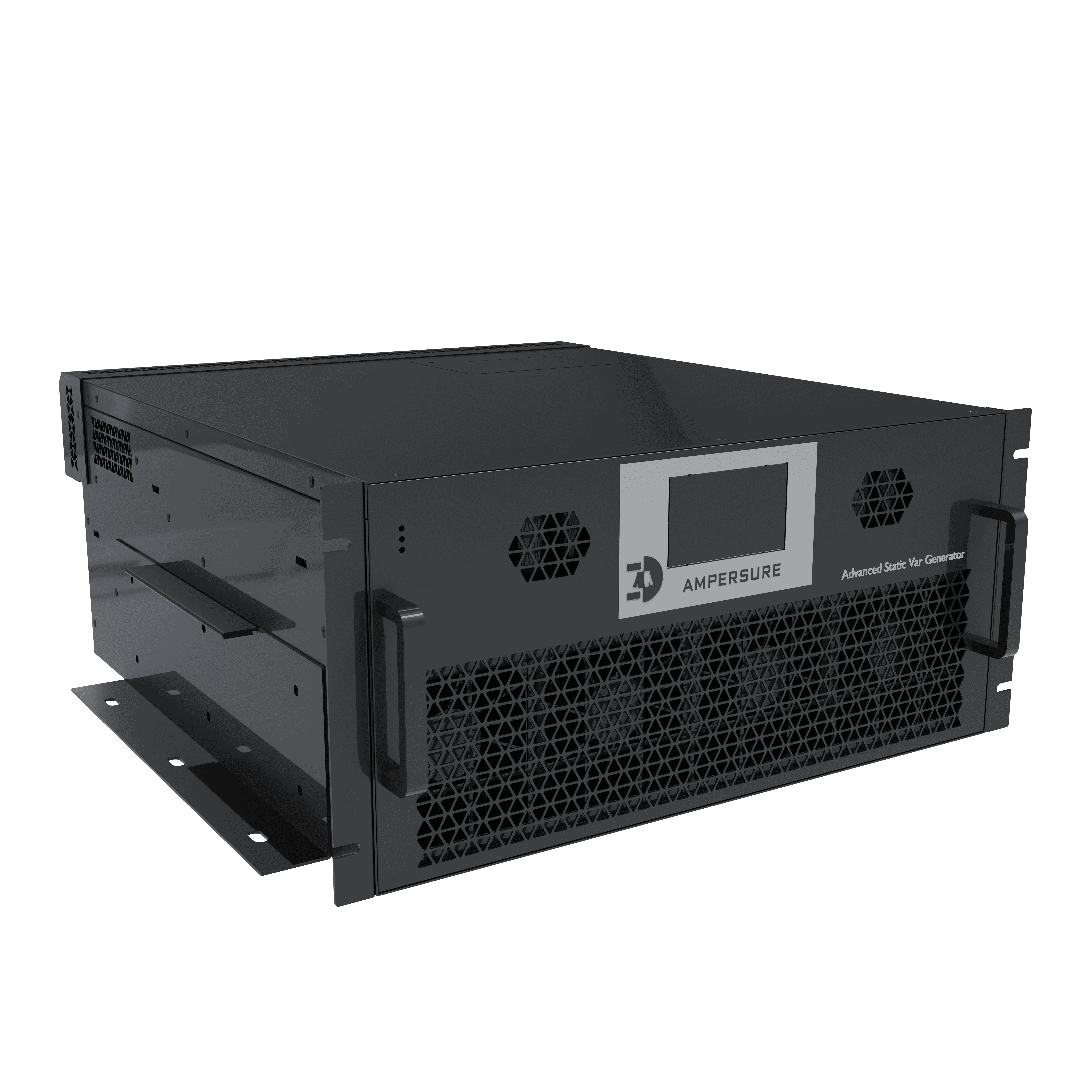
Understanding Power Factor and Its Role in Electrical Efficiency
Power Triangle: Real, Reactive, and Apparent Power Explained
At the heart of power factor lies the power triangle, which quantifies three key components:
| Power Type | Measurement Unit | Role in Electrical Systems |
|---|---|---|
| Real Power (P) | Kilowatts (kW) | Performs actual work (e.g., heating) |
| Reactive Power (Q) | kilovolt-amps reactive (kVAR) | Sustains electromagnetic fields |
| Apparent Power (S) | kilovolt-amps (kVA) | Total power delivered to the system |
A 0.85 power factor means only 85% of apparent power performs useful work, with 15% lost to reactive power (Ponemon 2023). This inefficiency increases current draw and energy losses across distribution networks.
Phase Angle Between Voltage and Current as a Key Factor in Power Factor
The power factor basically measures how effectively electrical power is being used, calculated as the cosine of the phase angle (theta) between voltage and current waveforms. When looking at resistive loads like electric heaters, this angle stays pretty close to 0 degrees, so the power factor approaches 1 - meaning most of the electricity gets converted into usable heat. Things change with inductive loads though, particularly motors which create what's called lag. This causes theta to increase, dragging down the power factor significantly. In really bad scenarios, when there's complete lag without any actual work happening, the power factor can drop all the way to zero. That's why engineers always watch for these issues in industrial settings where motor efficiency matters so much.
Impact of Reactive Power and the Need for Correction
Factories that don't fix their power factor issues end up paying hefty fines from utility companies. The numbers tell the story pretty clearly too – most plants shell out around $740,000 every year just because their systems are drawing too much reactive power, according to some recent research from Ponemon back in 2023. Capacitor banks work against this problem by providing that needed reactive power right at the source instead of pulling it from the main grid, which takes pressure off the entire electrical network. Energy experts have found something interesting here as well. When facilities manage to boost their power factor up to about 0.95, the stress on local grids drops by roughly 18%. That means plants can actually handle more load without needing expensive new infrastructure or equipment replacements, saving both money and headaches down the road.
Harmonic Distortion and Its Effect on Power Factor in Non-Linear Loads
Switch mode power supplies and variable frequency drives create harmonic currents that mess up clean sine waves. What happens is these unwanted harmonics boost apparent power readings without actually delivering more usable energy, which brings down the actual power factor. Recent studies from 2023 showed that places with lots of harmonics can see their apparent power needs jump anywhere between 15% to maybe even 30% higher, all while running the same equipment. This means standard capacitor banks just won't cut it anymore for power factor correction in such environments. Facilities dealing with this issue need more advanced solutions specifically designed for harmonic mitigation.
Active Power Factor Correction Using Boost Converters
Principles of Active Power Factor Correction (APFC) with Switching Converters
Active power factor correction or APFC works by employing switching converters that reshape the input current into a smooth sine wave pattern matching the voltage curve, which typically results in power factors exceeding 0.95 according to recent research from IEEE Transactions in 2023. What sets this approach apart from traditional passive techniques is how it constantly adapts to changing loads through high frequency pulse width modulation (PWM). This adjustment process cuts down on wasted reactive power somewhere between 60% and 80%, depending on system conditions. Most APFC systems operate at around 90% to 95% efficiency levels, which makes them particularly well suited for today's power electronics applications where accurate performance metrics and regulatory standards matter quite a bit in industrial settings.
Operation of Boost Converter-Based PFC Circuits
Boost converter topologies dominate APFC designs because they enable continuous input current and output voltage step-up. By controlling the inductor current to follow a sinusoidal reference aligned with the AC voltage, these circuits eliminate phase displacement and suppress harmonics. Key components include:
- High-frequency IGBT/MOSFET switches operating at 20–150 kHz
- Fast-recovery diodes to minimize reverse recovery losses
- Multi-layer ceramic capacitors for stable DC bus voltage
This configuration ensures near-unity power factor while supporting wide input voltage ranges.
Control Strategies for Achieving Unity Power Factor
Modern APFC controllers use advanced techniques to maintain high performance under varying conditions:
- Average current mode control: Delivers precise current tracking with less than 5% total harmonic distortion (THD) across loads.
- Critical conduction mode (CRM): Adjusts switching frequency dynamically, enabling valley switching for improved efficiency at light loads.
- Digital signal processing (DSP)-based algorithms: Provide real-time adaptation to nonlinear and time-varying loads.
| Control Method | THD (%) | Efficiency | Cost |
|---|---|---|---|
| Analog CRM | <8 | 92% | Low |
| Digital PWM | <3 | 95% | High |
Digital solutions offer superior harmonic performance but come with higher implementation cost.
Interleaved Boost Converters for High-Power Applications
For power levels exceeding 10 kW, interleaved boost converters distribute the workload across multiple parallel stages, phase-shifted to cancel ripple current. This design enables:
- 40% smaller magnetic components
- Reduced EMI through inherent ripple cancellation
- Modular scalability for high-power systems
Compared to single-stage designs, interleaving reduces conduction losses by 22% (Power Electronics Journal 2023), making it well-suited for EV charging stations and industrial UPS systems requiring >98% power factor at full load. The architecture also eases thermal management and extends component lifespan.
Advanced PFC Topologies: Bridgeless and Totem Pole Designs
Bridgeless PFC Topologies and Their Efficiency Advantages
The bridgeless PFC design gets rid of the standard diode bridge rectifier found in most power supplies, which cuts down on conduction losses by about 30% when compared to older models. The way it works is pretty straightforward actually - since current flows through fewer semiconductor junctions, the overall system becomes more efficient. This makes a big difference particularly for those mid to high power applications we see everywhere these days, especially in server power supplies where every bit counts. Looking at what's happening in the market right now, recent numbers indicate that 3.6 kW bridgeless PFC units equipped with gallium nitride transistors are hitting around 180 watts per cubic inch of power density while still keeping efficiency levels above 96%. For anyone dealing with tight spaces or trying to maximize rack capacity, these improvements represent significant advantages that can't be ignored.
Totem Pole PFC Architecture in Modern SMPS Systems
The totem pole PFC design is gaining popularity among modern switched mode power supply engineers because it works so well with those new wide bandgap materials like silicon carbide and gallium nitride. What makes this topology stand out? Well, it can handle power flowing both ways and manages to pull off soft switching which cuts down on those pesky switching losses by around 40% when dealing with 3kW systems. Some recent tests looked at how these interleaved configurations perform in actual data centers. The numbers were impressive too - getting close to 98% efficiency while keeping total harmonic distortion under 5%. That's pretty much exactly what the IEC 61000-3-2 standards demand for acceptable harmonic emissions from electrical equipment. Makes sense why manufacturers are starting to take notice.
Conduction Loss Comparison: Traditional vs. Bridgeless PFC Designs
Traditional PFC circuits lose 1.5–2% efficiency solely through diode bridge conduction. Bridgeless designs reduce this loss to 0.8–1.2% under full load by halving the number of conducting devices in the path. This reduction directly lowers heat generation, simplifying cooling requirements and improving long-term reliability in demanding environments.
Implementation Challenges With GaN/SiC Devices in Totem Pole PFC
GaN and SiC components offer great benefits but need attention to PCB design when dealing with parasitic inductance issues that lead to voltage spikes during switch transitions. Getting the dead time right between switches matters a lot if we want to avoid shoot through problems in those totem pole half bridge configurations. For frequencies over 100 kHz, most engineers suggest cutting power ratings by around 15 to 20 percent to keep things running reliably. This becomes even more critical in harsh environments like aerospace systems or telecom equipment where temperature extremes and vibration make reliability so much harder to achieve.
Passive Power Factor Correction and Capacitor-Based Solutions
Basics of Passive Power Factor Correction (PPFC) Using Inductors and Capacitors
Passive power factor correction, or PPFC for short, works by using inductors and capacitors that don't change their values to counteract reactive power problems in AC electrical systems. When we hook up capacitor banks alongside things like motors which are naturally inductive, it helps bring the voltage and current waves back into alignment. Industry studies show this simple approach fixes around two thirds to three quarters of all power factor problems out there. What's really nice about it from a budget standpoint is that it typically runs anywhere from 30% to half what active correction methods would cost. Sure, it can't adjust on the fly like some smarter systems can, but for facilities running consistent loads day after day, PPFC still offers great value for money when looking at long term operational savings.
Using Capacitors for Power Factor Improvement: Static and Switched Banks
Two main capacitor configurations are used in industrial settings:
- Static banks provide fixed compensation, best suited for consistent load profiles.
- Switched banks use relay or thyristor-based controls to adjust capacitance dynamically based on real-time demand.
According to the 2024 Industrial Power Systems Study, switched banks achieve 92–97% power factor in variable-load environments, outperforming static units, which typically reach 85–90%.
Capacitor Bank Deployment in Industrial Reactive Power Compensation
Effective deployment follows three core principles:
- Install banks close to major inductive loads to reduce line losses (I²R).
- Size units at 125% of calculated reactive power need to account for aging and tolerance.
- Integrate harmonic filters when total harmonic distortion exceeds 5% to prevent resonance risks.
Facilities implementing this strategy typically recover costs within 18–24 months via lower demand charges and avoidance of utility penalties.
Sizing Capacitors for Optimal Power Factor Correction
Accurate sizing is crucial to avoid under- or over-correction. The required reactive compensation is calculated as:
Qc = P (tanθ1 - tanθ2)
Where:
- Qc = Required capacitance (kVAR)
- P = Real power (kW)
- θ1/θ2 = Initial and target phase angles
Undersized banks leave reactive power unaddressed, while oversized ones create leading power factors that may destabilize voltage regulation. Most industrial systems aim for a corrected power factor between 0.95 and 0.98 lagging to balance efficiency and system safety.
Comparing Active and Passive PFC Methods for Optimal Selection
Performance, Cost, and Size Comparison of Active vs. Passive PFC
Active PFC achieves power factors above 0.98 using switching converters and digital control, while passive methods typically max out at 0.85–0.92 with capacitor banks. According to the 2024 Power Factor Solutions Report, active systems reduce total harmonic distortion by 60–80% compared to passive setups. Key trade-offs include:
- Cost: Active PFC units cost 2–3 times more than passive equivalents
- Size: Passive systems occupy 30–50% less physical space
- Flexibility: Active circuits maintain high correction efficiency from 20% to 100% load
While active topologies involve 40% more components, their dynamic response makes them indispensable in variable or sensitive applications.
Application-Specific Considerations: PFC in Switched-Mode Power Supplies
In switched-mode power supplies (SMPS), active PFC is increasingly standard to comply with IEC 61000-3-2 harmonic limits. Industry analyses confirm that active PFC delivers 92% efficiency at full load in 500W+ units, compared to 84% for passive designs. Selection depends on:
- Regulatory compliance needs
- Thermal design constraints
- Lifecycle cost targets
High-end applications like server PSUs and medical devices favor active PFC for its ability to handle rapid load transients and maintain clean input current.
Why Low-Cost Power Supplies Still Rely on Passive PFC Despite Limitations
Around 70 percent of power supplies below 300 watts rely on passive PFC technology mainly because it costs about ten to twenty cents per watt. When dealing with steady load situations like those found in LED lighting systems or household electronics, passive methods usually get the job done pretty well, sometimes hitting power factors close to 0.9. These setups satisfy basic regulations without needing complicated active components that drive up prices, which is why manufacturers keep going back to them especially when budgets are tight. The simplicity alone makes all the difference for many companies looking to cut costs without sacrificing too much performance.
FAQ
What is the power triangle in electrical systems?
The power triangle consists of three components: Real Power (performs actual work), Reactive Power (sustains electromagnetic fields), and Apparent Power (total power delivered to the system).
How does phase angle affect power factor?
The power factor is the cosine of the phase angle between voltage and current waveforms. A larger phase angle indicates a lower power factor, reducing electrical efficiency.
What are the financial impacts of poor power factor?
Industries with poor power factor may face hefty fines from utility companies, often incurring up to $740,000 annually due to inefficiency.
How do active and passive power factor correction methods differ?
Active PFC uses switching converters for high efficiency and flexibility, while passive PFC employs capacitor banks, offering lower cost and space requirements but less adaptability.
Table of Contents
- Understanding Power Factor and Its Role in Electrical Efficiency
- Active Power Factor Correction Using Boost Converters
- Advanced PFC Topologies: Bridgeless and Totem Pole Designs
- Passive Power Factor Correction and Capacitor-Based Solutions
- Comparing Active and Passive PFC Methods for Optimal Selection
- FAQ